Wall panelling has become the most requested single item in Dubai interiors, and the gap between a panelled wall that looks built-in and one that looks stuck on comes down to one thing: whether it was set out for the wall or simply applied to it.
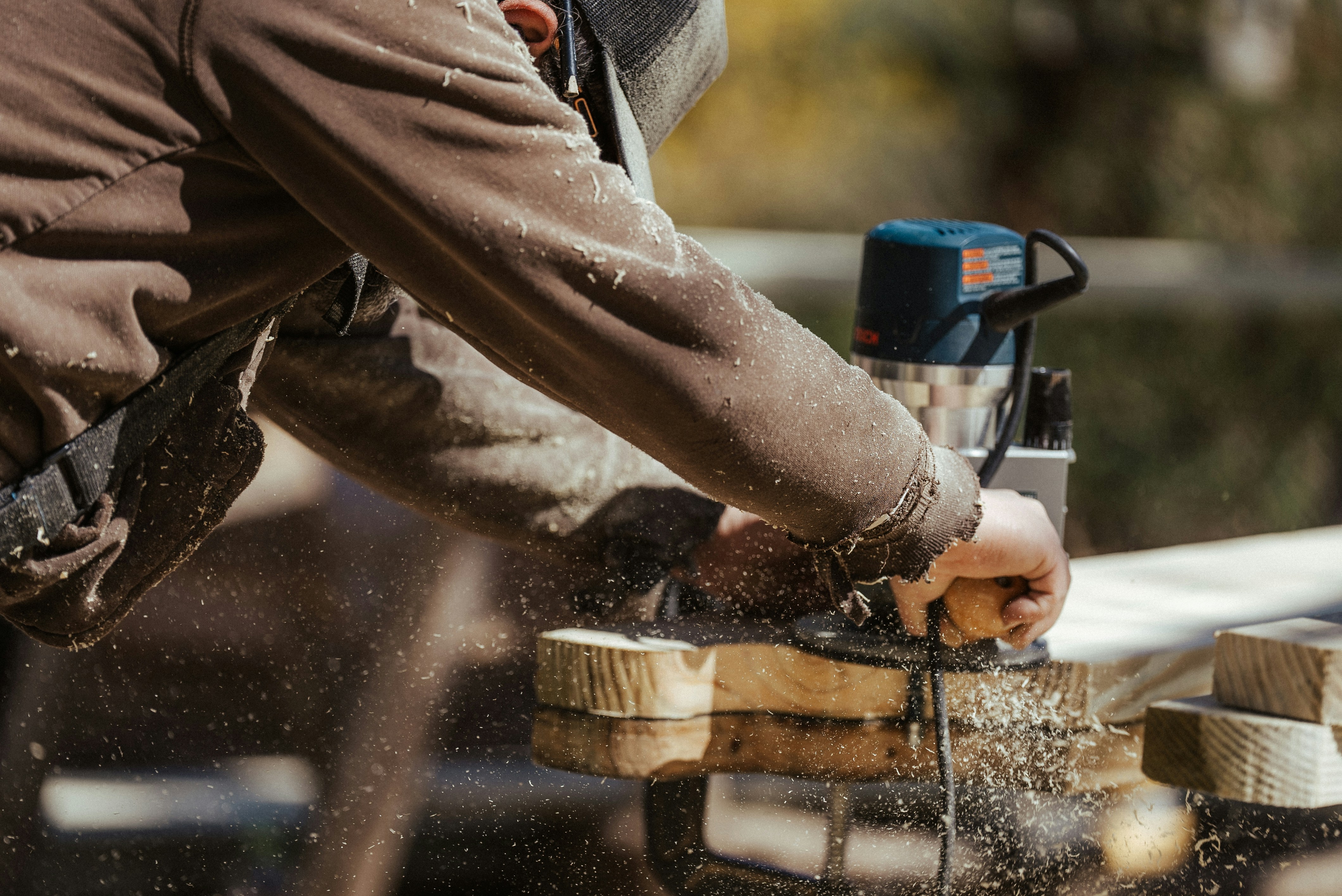
We machine and finish panels in our Al Khawaneej factory and install them ourselves, so this is what we have learned about getting it right.
The styles worth knowing
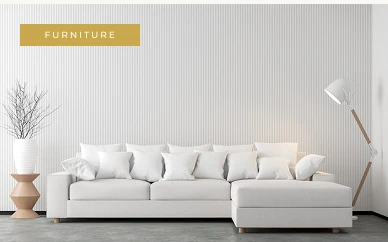
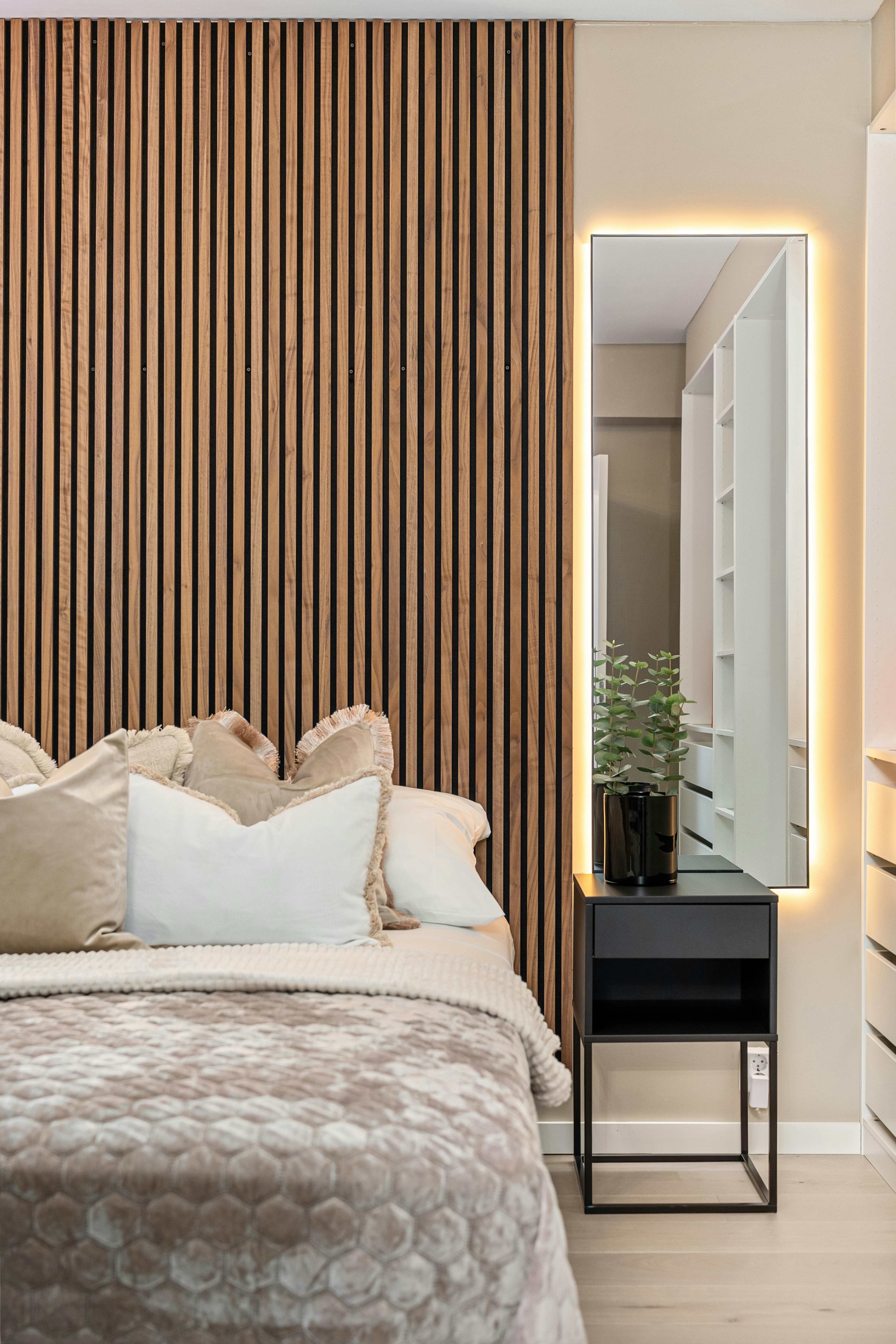
Fluted. Vertical half-round or U-grooves, usually in MDF or veneered board. Currently the most popular, reads as contemporary, and is very effective behind a bed or a TV. It also makes a ceiling look higher.
Slatted. Separate timber battens with a gap between, often over a dark backing or acoustic felt. Warmer and more textural than fluted, and the felt-backed version genuinely reduces echo in a hard-surfaced room.
Shaker and beaded. Flat panels framed by rails and stiles, painted. Classic rather than contemporary, and the right choice in a traditional villa, a formal dining room or a hallway.
Upholstered and leather. Fabric or leather over padded panels, plain, buttoned or channelled. The best option behind a bed because it is soft where your head goes, and it can be made in the same fabric as the bed or the sofas.
Mirrored and metal trim. Usually used as a detail within another system rather than on its own: a brass or black inlay between fluted sections, or a mirror panel to bounce light down a dark corridor.
Where panelling earns its place
Behind a bed. The best use of all. A wall-height panelled headboard wall removes the need for a separate headboard and makes a standard bedroom look designed. Covered on our custom beds page, since the two are usually made together.
Behind a sofa or majlis run. Continuous seating against a bare wall reads as a corridor. Panelling gives it a back, and protects the paint from heads and shoulders.
A TV wall. Panelling with a service void behind it hides the power, HDMI and soundbar cables completely, which is the main reason people panel a TV wall in the first place.
Hallways and staircases. Panelling at dado height takes the knocks in the part of the house that gets the most traffic.
Offices and reception walls. A panelled reception wall with the logo applied is the standard treatment for a reason: it photographs well and hides the wiring.
Setting out: the part that matters
This is where panelling is won or lost, and it cannot be fixed after installation.
Symmetry. The panel or flute layout should be centred on the wall, or on the bed or TV, so the two end panels are the same width. A layout that starts at one corner and runs out at the other with a half panel looks wrong even to someone who cannot say why.
Switches and sockets. A socket cut into the middle of a flute looks like damage. We plan the layout so switches and sockets fall on a joint or a flat section, and where that is impossible we move the socket.
Height and termination. Panelling has to stop somewhere deliberate: at the ceiling, at a cornice, at dado height with a capping rail, or level with a door head. Stopping 20 cm below the ceiling for no reason is the most common mistake.
Returns and corners. Where panelling turns a corner or meets a window reveal, the return has to be made, not butted. This is the detail that separates factory-made panelling from site-built.
MDF or solid timber
For painted panelling, MDF is better than solid timber in this climate, not worse. It is dimensionally stable, it does not move with humidity, and it takes a sprayed finish perfectly flat. Solid timber is the choice where you want a visible wood grain, and veneered board gives you the same look with more stability.
Moisture-resistant MDF should be used in any bathroom or wet-adjacent application.
Finishing: spray, do not brush
Panels we make are primed and sprayed in the workshop before they come to site. That matters for two reasons: a sprayed finish has no brush marks on the flat faces and inside the grooves, and it means there is no paint smell, overspray or drying time in your room.
Brush-painting fluted panelling on site fills the grooves and leaves visible strokes, and it is the quickest way to make a good panel look cheap.
What it costs, in general terms
Painted MDF shaker and fluted panelling sit at the lower end. Veneered and slatted timber are mid-range. Upholstered, leather and anything with mirror or metal inlay sit at the top, because the hand work goes up sharply. Cost is driven by the panel area, the number of corners and returns, and the finish, rather than by the style name.
Can it be removed later? Yes. Panels are fixed to battens or directly to the wall and can be taken off, though the wall will need filling and repainting afterwards.
Send a photo of the wall with its width and height, and tell us what sits against it. We will set out the layout and quote, with a site measurement included anywhere in Dubai. The styles and construction detail are on our wall panelling page, and if you are deciding between panelling and a papered feature wall, our wallpaper page covers the alternative.
Panelling succeeds or fails on the setting out. The style is the easy part.